This is not a hit piece.
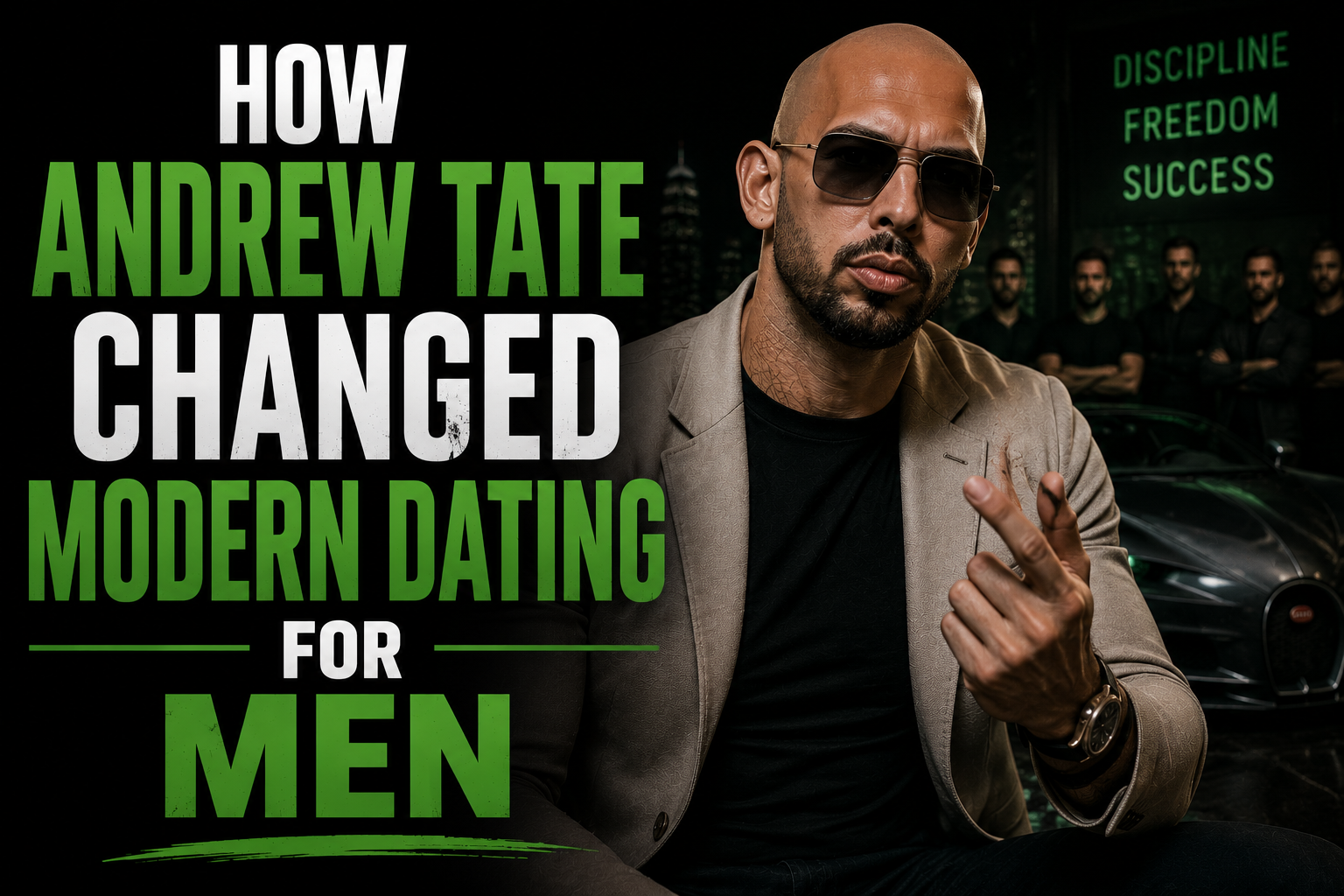
If you came here expecting someone to spend three thousand words explaining why Andrew Tate is a bad person, you are going to be disappointed. That conversation exists everywhere and it produces nothing useful for the men who actually need help.
What this is, is an honest assessment of the specific things Tate got right, the specific things he got catastrophically wrong, and what the difference means practically for men who absorbed his content and are now trying to figure out why their results with women are not where they thought they would be.
Because that man exists. In significant numbers. And he deserves a straight answer.
What Tate Actually Got Right
Start here, because skipping it would be dishonest and counterproductive.
He told men to take responsibility for their lives.
In a cultural moment where the path of least resistance was to frame male struggle as someone else’s fault, Tate said: your life is your responsibility. Your fitness, your finances, your mindset, your results. Stop waiting for external conditions to improve and build something.
That message landed because it was true and because a lot of men needed to hear it. Self-pity is genuinely corrosive. Accountability is genuinely productive. On this point, Tate was right and his critics who dismiss the entire message because of the messenger are doing a disservice to the men who benefited from it.
He made confidence visible.
Whatever you think of how it was packaged, Tate modelled a version of masculine confidence that was unambiguous and unapologetic. For men who had never seen that modelled clearly, who grew up without reference points for what a confident man looks and sounds like, there was real value in the visibility.
The problem, which we will get to, is that what was modelled was a performance of confidence rather than the real thing. But the pointing-at was useful even when the thing being pointed at was imperfect.
He pushed men toward physical development and financial ambition.
Look after your body. Build something with your life. Have standards for yourself. None of these are bad instructions. Men who took this seriously and applied it improved their lives in ways that were real regardless of anything else.
The foundation is not wrong. The structure built on top of it is where the problems live.
Where It Goes Catastrophically Wrong

And it does go catastrophically wrong. Specifically, in two places.
The contempt for women.
This is the one that does the most damage and the one that is most baked into the Tate worldview at a structural level.
The version of women that Tate’s content presents, as fundamentally manipulative, as unable to love men genuinely, as creatures to be managed and dominated rather than connected with, is not just morally wrong. It is practically disastrous for any man who absorbs it and then tries to build a real relationship.
Here is the mechanism. A man who genuinely believes women cannot be trusted and are fundamentally self-interested approaches every interaction from a place of guardedness and low-grade contempt. He might be able to hide it initially. But it leaks. In the way he responds when she disagrees with him. In the edge that comes into his voice when she exercises independence. In the slight hardness that sits underneath the charm.
Emotionally intelligent women feel this immediately. Not as a conscious assessment. As a felt sense of something being slightly wrong. Something slightly unsafe. And they move away from it, which confirms, for the Tate-influenced man, that women cannot be trusted, which deepens the contempt, which makes the next interaction worse.
It is a self-fulfilling loop. And it specifically repels the kind of women who are most worth being with.
The manufactured persona.
The alpha male character that Tate presents is not a man who has done deep inner work and arrived at genuine confidence. It is a performance. A carefully constructed character designed for cameras and content, built on expensive props and social dominance displays and a very specific set of carefully chosen associations.
Men who try to replicate this performance outside of a content creation context find that it does not transfer. Because it was never real confidence. It was the aesthetic of confidence without the foundation.
Real confidence, as Dale’s framework describes it, is quiet. It does not need Lamborghinis to exist. It does not require dominance displays or the humiliation of others to stay intact. It is a man who knows himself, is grounded in his own worth, and does not need external validation to feel okay.
The Tate persona is the opposite of that. It is entirely dependent on external validation, on status, on being seen to be winning. Remove the props and there is no inner game holding it up.
Men who adopt the persona get some of the surface effects. They project something that reads as confidence at a distance. And then they get close to a woman who is actually worth being with and the performance has nowhere to go.
The Men Who Got Hurt By This
This is the part that matters most and gets discussed least.
The men most drawn to Tate’s content were not men who already had it together. They were men who were struggling. Lonely, frustrated, feeling like the world was not giving them what they were working for. Men in pain, looking for a framework.
Tate gave them a framework. A framework that said: your pain is not your fault, women are the problem, and here is how to win the game they are playing against you.
That framework felt relieving in the short term. Like finally having an explanation. Like finally having permission to be angry rather than confused.
What it did not do is address what was actually causing the struggle. The inner game patterns. The limiting beliefs. The specific ways these men were showing up in interactions that were producing the results they were getting. Because the framework specifically pointed away from those things. It pointed at women instead.
And so the men who absorbed it most deeply often ended up in a worse position than before. Angrier. More guarded. With a set of beliefs about women that made genuine connection harder rather than easier. More confident in some surface ways. More isolated in the ways that actually mattered.
That is a real cost and it deserves to be named clearly.
The Actual Alternative

Not weakness. Not the opposite of everything Tate represents.
The accountability is right. Keep it. The ambition is right. Keep it. The physical development is right. Keep it. The refusal to be a doormat is right. Keep it.
What needs to go is the contempt. The manufactured persona. The belief that women are opponents in a game rather than people worth genuinely connecting with.
Replace those things with the inner game work that produces actual confidence rather than performed confidence. With the understanding of attraction that comes from real experience rather than ideology. With genuine curiosity about the women you meet rather than a framework for managing them.
That man, the one who has Tate’s ambition and accountability without his contempt and performance, is the man who gets the results that the Tate content promises and cannot deliver. Because he is real. Because what women feel around him is safety and genuine presence rather than a performance they are supposed to be impressed by.
Building that man is the work. It is harder than adopting a persona. It produces something that lasts.
If You Absorbed Tate’s Content and Want Something Real
The strategy call with Dale is not a place where you will be judged for where you have been. Every man arrives from somewhere. What matters is where you are going.
One honest conversation about what is actually happening in your dating life, what the real patterns are, and what the work looks like to change them.
Come as you are. That is always enough to start.
Book Your Free Strategy Call → The confidence Tate pointed at is real. The path he described to get there is not. The call is where the real path starts.