You’ve been doing everything right.
Good photos. Decent bio. Swiping consistently. Maybe you even paid for the premium subscription because the free version felt like shouting into a void. And the results are somewhere between disappointing and demoralising. A handful of matches, fewer conversations, dates that are rarer than they should be given the hours you’ve put in.
Here is the thing nobody tells you when you download the app: the system is not designed to work for you. It is designed to keep you on the app. Those are two very different things.
The Math That Explains Everything
Dating apps are not a level playing field. They never were, but most men don’t know exactly how tilted the table is until they see the numbers.
On most major dating platforms, roughly 78 percent of likes go to the top 20 percent of male profiles. The remaining 80 percent of men are competing for the scraps. And the scraps, on a platform where women receive so many matches that a lot of them disengage entirely, are very thin.
It gets more specific than that. Studies consistently show that women on dating apps swipe right on somewhere between 4 and 14 percent of profiles they see. Men swipe right on closer to 60 percent. Which means the entire experience is built around female selectivity and male volume, and the algorithm rewards the men at the top of the attractiveness curve while making everyone else essentially invisible.
This is not a personal failing. It is a structural reality of how these platforms work. The app needs you to keep swiping, keep upgrading, keep coming back. The moment you find what you’re looking for, you leave. That outcome is not in their financial interest.
So they optimise for engagement, not results. And for most men, engagement without results means months of low-grade frustration that quietly erodes confidence.
What the Algorithm Actually Rewards
Understanding this helps, so let’s be specific.
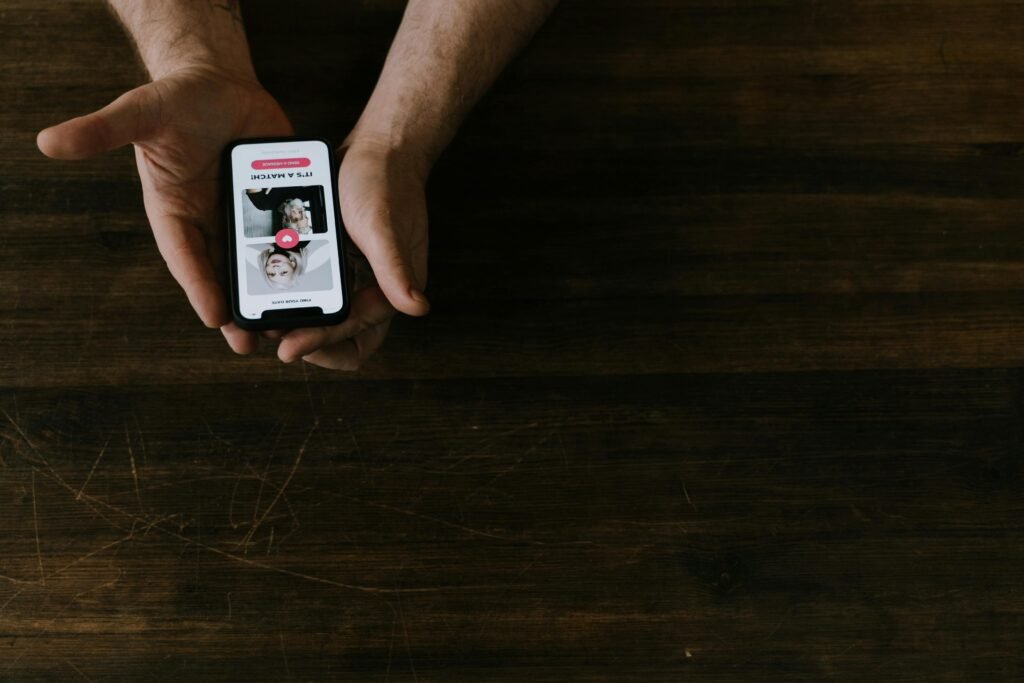
The apps use attractiveness scoring systems, sometimes called Elo scores or variations of them, that rank your profile based on how other users interact with it. If high-rated profiles swipe right on you, your score goes up. If you get ignored or left-swiped consistently, it goes down. And a lower score means the algorithm shows your profile to fewer people, which means fewer matches, which confirms your suspicion that nothing is working.
The profile photos matter enormously, more than most men account for. Not just whether you’re good-looking, but the quality of the image, the lighting, whether you’re the most prominent person in it, whether it conveys anything interesting about your life. A mediocre photo of an objectively attractive man will underperform a well-shot photo of an average-looking man with good framing and context.
The bio matters less than the photos but more than most men bother with. Nobody is writing essays. But a blank bio or a list of adjectives (“adventurous, loves to laugh, dog dad”) signals nothing memorable. One specific, slightly unexpected line does more than a paragraph of generic self-description.
All of that said, even a well-optimised profile is fighting against the structural problem. You can improve your position in the 80 percent. Getting into the top 20 percent on an app, without significant investment of time, money, and effort into your profile and photos, is genuinely difficult for most men.
The Confidence Cost Nobody Talks About
Here is the part that matters most and gets discussed least.
Extended time on dating apps, especially with poor results, does something to how a man sees himself. The rejection is ambient and constant. It doesn’t come in one clear moment that you can process and move on from. It comes in the form of silence. Profiles you swiped on that never swiped back. Matches that never responded. Conversations that died after two exchanges for no reason you can identify.
That kind of diffuse, formless rejection is surprisingly hard to metabolise. Because there’s no information in it. You don’t know what didn’t land. You can’t adjust and try again. You just sit with the result and your brain, being the pattern-seeking thing it is, starts drawing conclusions.
After six months of this, a lot of men have quietly decided that they are less attractive and less desirable than they actually are. They carry that into real-world interactions. They approach with less confidence. They expect less. They get less.
The app didn’t just waste their time. It actively made things worse.
What Actually Works Instead
Cold approach.
This is Dale’s area and the contrast with apps is stark. When you approach a woman in person, you are not competing with five hundred other profiles. You are the only man in her immediate world who has shown up, made eye contact, and said something. The playing field is not just level. It tips in your favour simply because you showed up.
In-person attraction also operates on completely different signals than a photo on a screen. Your energy, your voice, the way you hold yourself, the ease or tension in how you speak, these things communicate volumes that no profile can capture. A man who photographs averagely but has genuine presence and confidence will consistently outperform his app results in the real world. Almost without exception.
The learning curve is real. The first approaches are uncomfortable. But unlike swiping, every approach builds something. Calibration. Confidence. The ability to read a situation and respond in real time. You get better at it. Your results compound. That almost never happens with apps, where you can swipe for a year and be no more skilled at actually meeting people than when you started.
Community and social circle.
Most of the best relationships start through social proximity. Mutual friends, shared environments, repeated contact over time. This is not new information but it gets forgotten in the age of apps because apps feel like a shortcut to the same outcome.
They’re not. A shortcut that doesn’t work is just a detour.
Investing in your social life, going to events, joining things, saying yes to more invitations, putting yourself in rooms where you meet people organically, produces results that compound in the same way approach does. You become known. You get introduced. You encounter people multiple times, which is how real attraction tends to build.
This takes longer to set up than downloading an app. It produces something the app cannot: a context in which you already exist as a person rather than a thumbnail.
Improving in the real world instead of the digital one.
The hours men spend optimising their profiles, testing different photos, reading about algorithm hacks, could be spent developing the actual qualities that make them attractive in person. Presence. Confidence. Social ease. The ability to hold a conversation that goes somewhere interesting.
Those qualities transfer everywhere. They work in a bar, at a friend’s dinner, at a work event, in a coffee shop queue. A better Hinge profile works only on Hinge, and only imperfectly.
The Honest Assessment

Apps are not useless for everyone. For some men, with strong photos and strong profiles, in the right cities, at the right age ranges, they produce results. If that’s you, great. Keep using them.
But if you’ve been putting in consistent effort on apps for more than six months and the results are not matching the effort, the honest answer is that more effort on the same platform is unlikely to change the outcome significantly. The problem is structural, not a matter of trying harder.
The alternative is not more swiping. It’s developing the real-world skills that apps were always a substitute for. And those skills, once built, belong to you permanently. Nobody can update the algorithm and take them away.
Ready to Stop Waiting on the App?
If you’re done handing your dating life over to an algorithm and want to build something that actually works, the free strategy call with Dale is the place to start.
One conversation. Your specific situation. A clear picture of what to do instead.
Book Your Free Strategy Call →Spots go fast. If there’s one open, take it.